In many plants, failures don't happen out of nowhere. Before a line goes down, there are usually warning signs:
- Vibration outside the normal range.
- A machine that starts running hotter than usual.
- A pressure reading that shifts for just a few seconds.
The problem is that, often, no one catches it in time. And when the failure finally hits, the impact is already far greater than stopping the equipment at a planned moment: deliveries slip, materials get wasted, pressure on the teams rises, and the operation shifts into reactive mode.
According to Microsoft, 45% of the expected losses in companies' profits over the next decade could be tied to failures in the operational chain.
The challenge tends to repeat across many organizations
- Data captured manually, with errors or gaps.
- Teams that rely too heavily on the experience of a few key people.
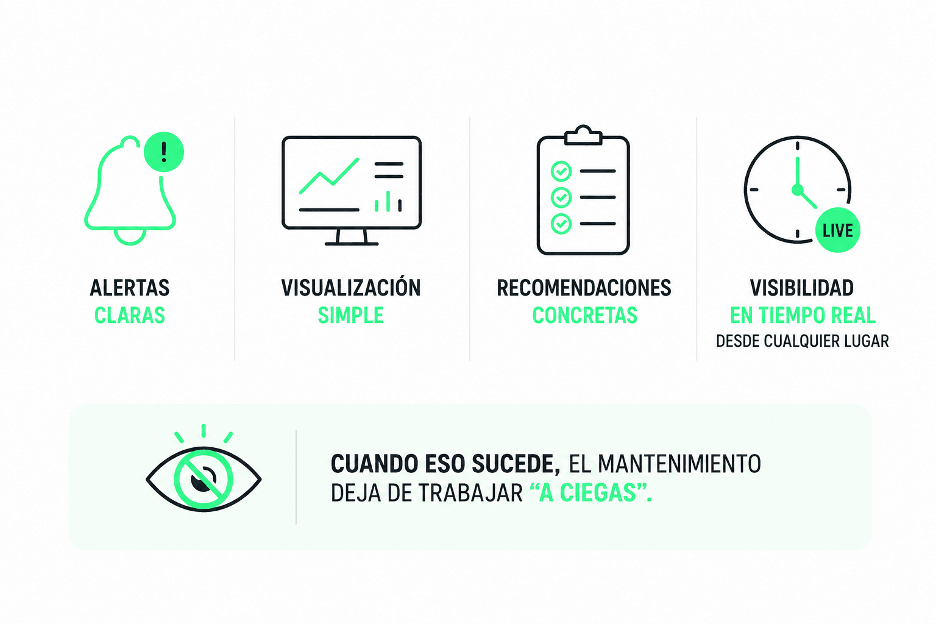
- No real-time visibility into what's happening on the plant floor.
- Maintenance stepping in only after the problem has already occurred.
And that's where one of the biggest opportunities for industry appears: moving from reacting to anticipating.
What changes with predictive maintenance?
Combining sensors, automatic data capture, and artificial intelligence makes it possible to detect patterns before a critical failure occurs. Instead of relying only on manual inspections or calendar-based maintenance, the system starts to understand how the equipment actually behaves: it anticipates deviations, detects anomalies, plans interventions, and reduces unexpected downtime.
According to Deloitte, predictive maintenance strategies can reduce unplanned failures by up to 70% and significantly improve productivity, cost control, and the value of machinery investments.
How a predictive maintenance strategy works
Automatic data capture
Sensors installed across the plant collect real-time data on the variables that signal a failure ahead of time:
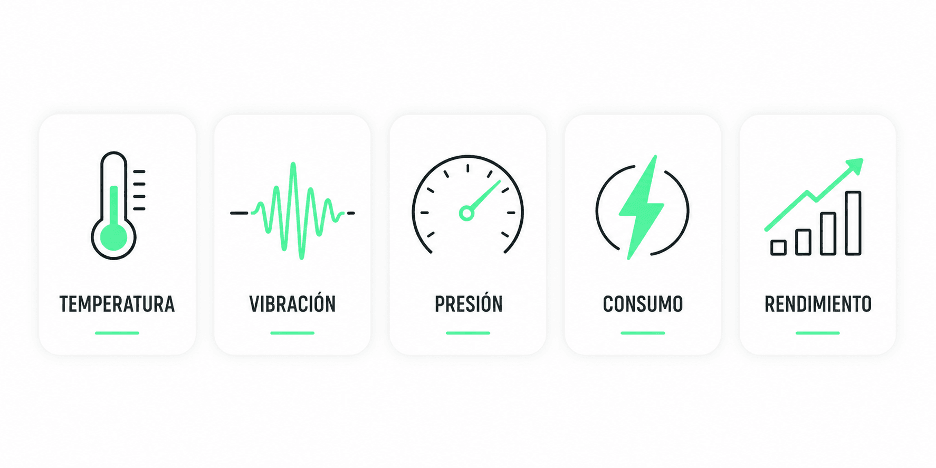
This removes much of the dependence on manual records and lets you work from reliable information. Because in maintenance a simple rule also applies: if the data is bad, the decisions will be too.
AI-powered predictive models
With that data, artificial intelligence models start to detect abnormal behavior. Some identify historical failure patterns; others find anomalies even in situations that had never occurred before. The goal isn't to replace the technical teams: it's to give them more context to decide better and act sooner.
Clear information for operations
One of the biggest problems with many industrial systems is that they generate data, but not clarity. An effective implementation translates technical information into something actionable:
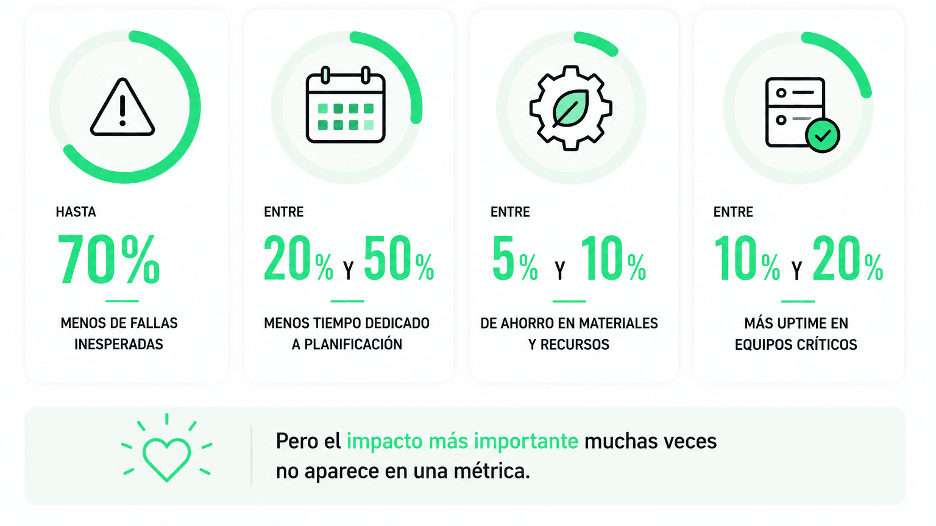
Because the most important impact often doesn't show up in a metric. You see it in day-to-day operations:
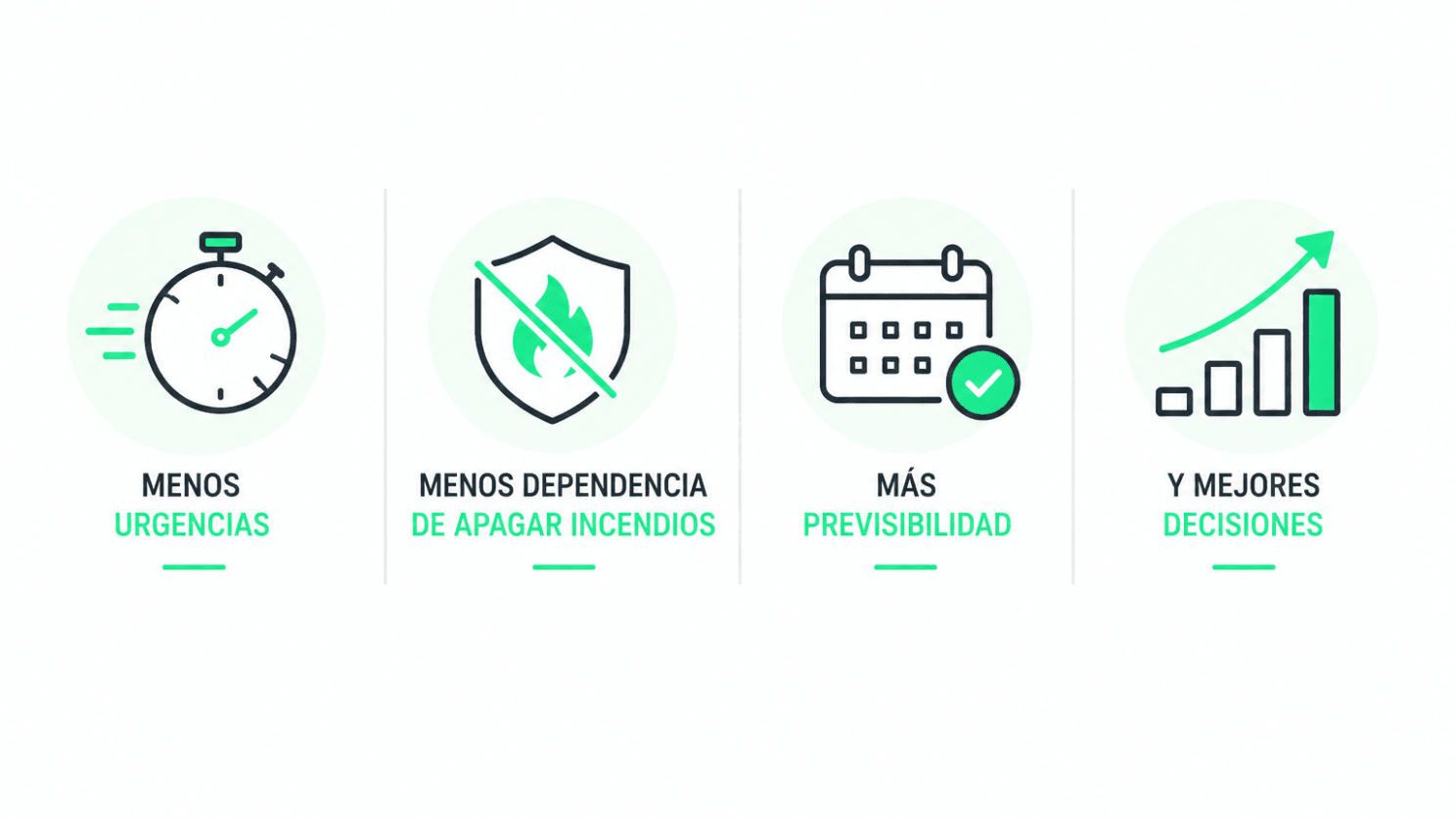
Predictive maintenance isn't just a technical improvement. It's a systemic advantage that holds up over time.